
Poetry Donation vs Purchase for Internetbooks

A poem does not ask to be handled like a carton of milk. It does not expire on a shelf, nor become more true because a large institution approved its barcode. Yet a reader still meets a small, human question at the door: poetry donation vs purchase - which gesture belongs to this reading?
One dollar can be a signal. A purchase can be a vow. Both can open a protected Internetbook and bring a reader into the strange old conversation between a living voice, God, nothingness, love, language, and the page that is no longer made of paper.
This is not merely a checkout question. It is a question of relation. Who pays? Why? What is being exchanged when the book is also a website, the password is also a key, and the reader may arrive from any country at any hour?
Poetry Donation vs Purchase Is Not a Battle
Donation and purchase are often forced into opposite moral corners. Donation sounds free, soft, voluntary. Purchase sounds commercial, fixed, final. But poetry has always been carried by mixed economies: gifts, patrons, subscriptions, hand-to-hand copies, borrowed books, paid editions, prayers, and chance encounters.
A digital poetry work can honor that complexity. The same reader may give a nominal donation today because money is tight, then buy an ebook later because the work stayed in the mind. Another reader may purchase first because they want a clear transaction and a permanent object of support. Neither route is spiritually inferior.
The real question is whether the exchange remains honest. Does the reader know what access they receive? Does the poet receive a real sign that the work matters? Does the format preserve the work's eccentricity rather than flatten it into another anonymous file?
At A Hundred Poes, the threshold can be as small as a US$1 donation that unlocks a password for protected reading. The smallness is intentional. It says: poetry is not a luxury reserved for those who can pay a large entrance fee. Let the door be narrow, but let it open.
What a Donation Says to a Poet
A donation begins with freedom. The reader chooses an amount or a nominal contribution, not because a corporation calculated an ideal conversion rate, but because a voice reached them. That choice can carry unusual warmth.
For readers who find poetry through spiritual searching, curiosity, or a late-night encounter with an unfamiliar sentence, donation protects the possibility of beginning without pressure. You do not need to prove that you are an academic, a collector, or a person with extra money. You can enter. You can read. You can decide what the encounter means after the encounter.
A nominal donation also creates a useful difference between access and extraction. Poetry placed entirely without a threshold can be treated as background noise, copied without attention, or consumed in the endless scroll. A dollar is not a wall. It is a pause. It asks the reader to make a tiny act of intention.
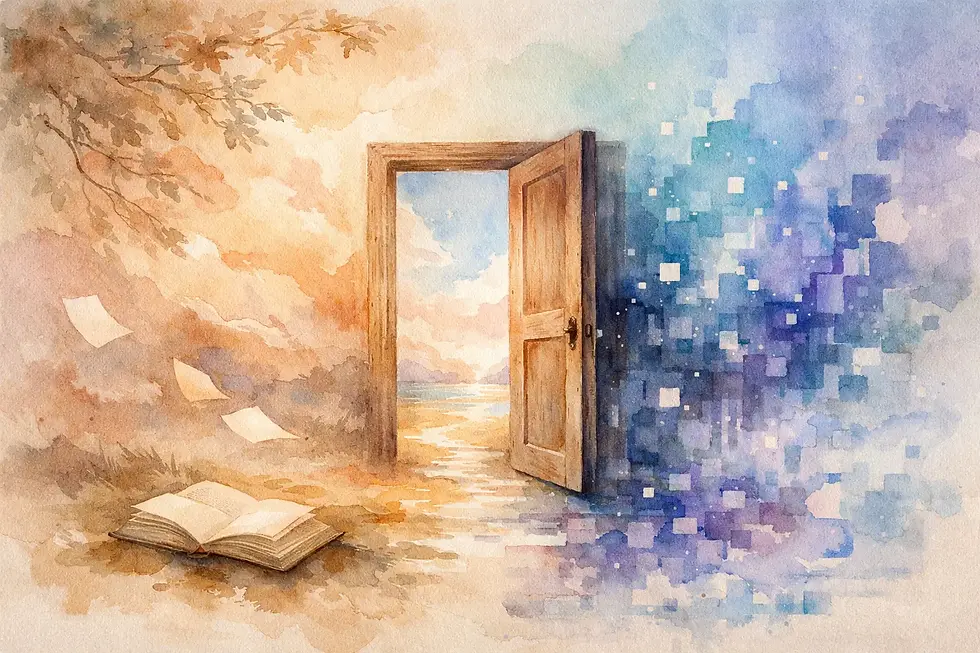
That pause matters. A password turns access into a threshold ritual: you give, you receive the key, you cross into the work. The browser becomes a room. The website does not merely advertise the book. It is the book.
Still, donation has limits. If you know the work matters to you, a purely minimal contribution may not reflect the value you personally received. There is no guilt required here. There is only proportion. When a poem keeps you company through grief, exile, faith, loneliness, or the beautiful confusion of being alive, supporting the artist more directly can be an act of friendship.
What a Purchase Makes Possible
A purchase is a clear agreement. You pay a stated price; you receive the offered edition or access. For many readers, that clarity is satisfying. It honors the labor behind the work without requiring anyone to guess what is appropriate.
Buying an ebook can also suit the reader who wants a distinct edition in their personal library. Digital does not mean unreal. A purchased text can be revisited, annotated in thought, returned to on another continent, and carried through years of changing devices and changing selves.
More deeply, a purchase recognizes that independent poetry is work. The poem may appear as an illumination, a fragment, an accident from the universe, or a message whispered through machinery. But someone made the sentences. Someone revised them, built the digital architecture, protected the pages, and kept the experiment alive.
A direct purchase helps sustain that independence. It can reduce the distance between writer and reader, with fewer gatekeepers deciding which spiritual questions are fashionable enough to publish. The reader is not buying permission to have a soul. The reader is helping make room for a singular authorial voice outside the usual machinery.
Purchase is not automatically better than donation, though. A high price can exclude the very people most ready for the work. A fixed commercial model can also make poetry feel like a product whose worth must be explained in sales language. Some poems refuse that language. They arrive saying: I am here. Read me if you dare. Deus ex machina is real!
The Internetbook Changes the Exchange
The old ebook is often a container. Download it, store it, perhaps forget where it went. An Internetbook proposes another form: the reading environment is part of the literary object. Its pages live in the browser, its boundaries can be protected by a password, and its reach is planetary from the beginning.
That changes the meaning of both donation and purchase. You are not only acquiring text. You are entering an ongoing publishing experiment. Since 2008, this kind of browser-first literary form has asked whether a book can remain a book while living in the web's strange weather.
It can. But it becomes a different kind of book.
The Internetbook can be immediate without being disposable. It can be translated across languages while keeping the original voice near. It can welcome a reader in the United States, Japan, Brazil, or anywhere the signal reaches. It can hold a metaphysical claim beside a practical instruction. Buy the ebook. Receive the password. Read the protected pages. Ask what God is doing inside the machine.
Of course, browser-based reading is not for everyone. Some readers need paper, offline access, or the physical geometry of a printed page. Others prefer a downloadable file they can keep in a chosen reading app. These are real preferences, not failures of imagination.
But for readers drawn to experimental literature, the Internetbook offers something print cannot fully imitate: the feeling that the work is alive at the point of encounter. Not alive because it changes itself every second, but because it meets you through a living network. The medium becomes part of the meditation.
How to Choose Your Door
Choose donation when you need a low-risk entrance, when you want to support an independent poet without a major commitment, or when you believe access should remain open to readers with limited means. A US$1 contribution can be modest in price and serious in intention.
Choose purchase when you want a defined edition, when you already know the work speaks to you, or when you can afford to give the project stronger direct support. Purchase can be the right answer for a reader who wants their financial act to say, plainly: keep making this.
Choose both across time if that is your honest rhythm. First, donate and receive the password. Read without rushing. Return to the lines that resist explanation. Then purchase an ebook or offer additional support if the work continues to travel with you. Literature does not require a single perfect transaction. It asks for attention.
And do not confuse price with depth. A costly book can remain unopened. A one-dollar doorway can lead to a sentence that rearranges an entire season of your life. The amount matters because independent art needs material support. But the reading matters because poetry is finally a meeting between consciousnesses.
A Small Key, a Large Room
The best choice is the one that lets you enter without pretending. Give what you can. Buy when you want a more formal bond. Respect the labor. Respect your own circumstances. Let neither market logic nor performative generosity tell you what the poem is worth.
A password is only a short sequence of characters. Yet every key contains a small theology: there is a door, there is an inside, there is a moment when someone chooses to cross. Let’s Poe Try!!!


Comments